Ninja Van 

parcel sorting

As Ninja Van operations expand, manual means of sorting parcels for delivery routes become an increasingly costly operation. The project achieved efficiencies by reducing the time to sort by 50%.

Responsibility

End-to-end research, design, testing, and delivery of processes and tools

Methods

User interview, field study, service blueprint, iterative prototyping

Brief

In the Philippines, Ninja Van is incurring pronounced costs for the workforce in the last mile sorting facilities. The product team was tasked to seek efficiencies in the sorting process.

The Philippines has complex geography and addresses. Our operations rely on the knowledge of local staff to pinpoint the locations of parcel recipients, resulting in a rapidly growing workforce to process delivery in the last mile sorting facilities. The business anticipates costs to double with upcoming expansion plans.

Discover 

— the sorting process

Our team identified four groups of interviewees to learn more about the end-to-end sorting operation. We had specific learning objectives for each group.

Higher management
Country head of fleet & national expansion
  • Last mile sorting procedure
  • Allocation of headcount to parcel volume
  • Team structure, roles and responsibilities
Regional managers
  • Challenges and strategy differences each region
  • Evaluate the potential impact of solutions
  • Identify suitable starting ground
Sorting faclity team
Facility managers
  • Liaised to provide visual recordings of sorting processes
  • Learn about the pain points in managing facility resources
Sorters
  • Approaches and challenges in processing parcels
  • Obstacles faced when they first started
  • Motivations to do the job well

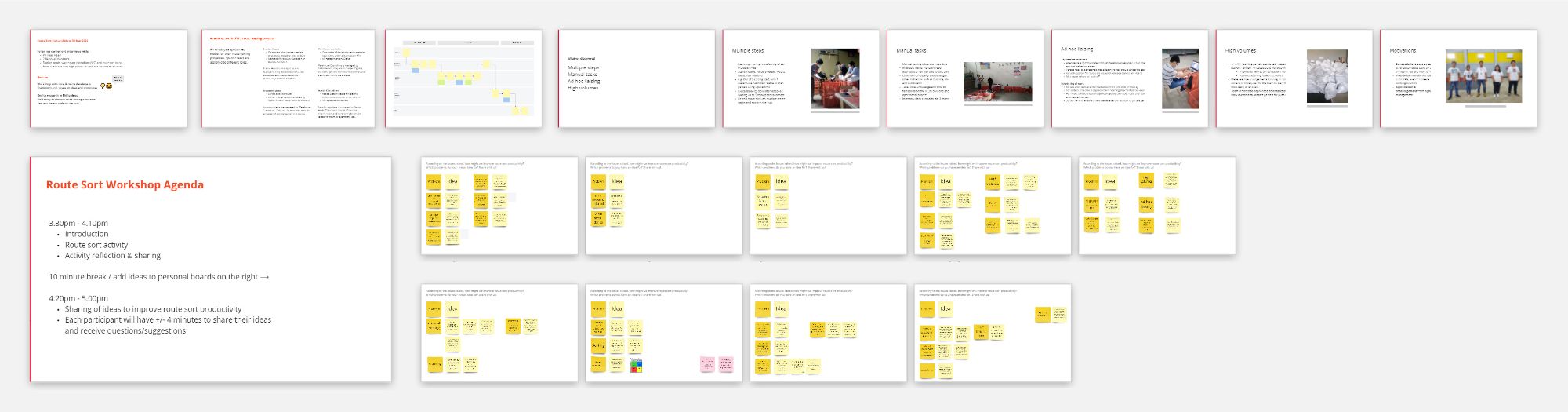
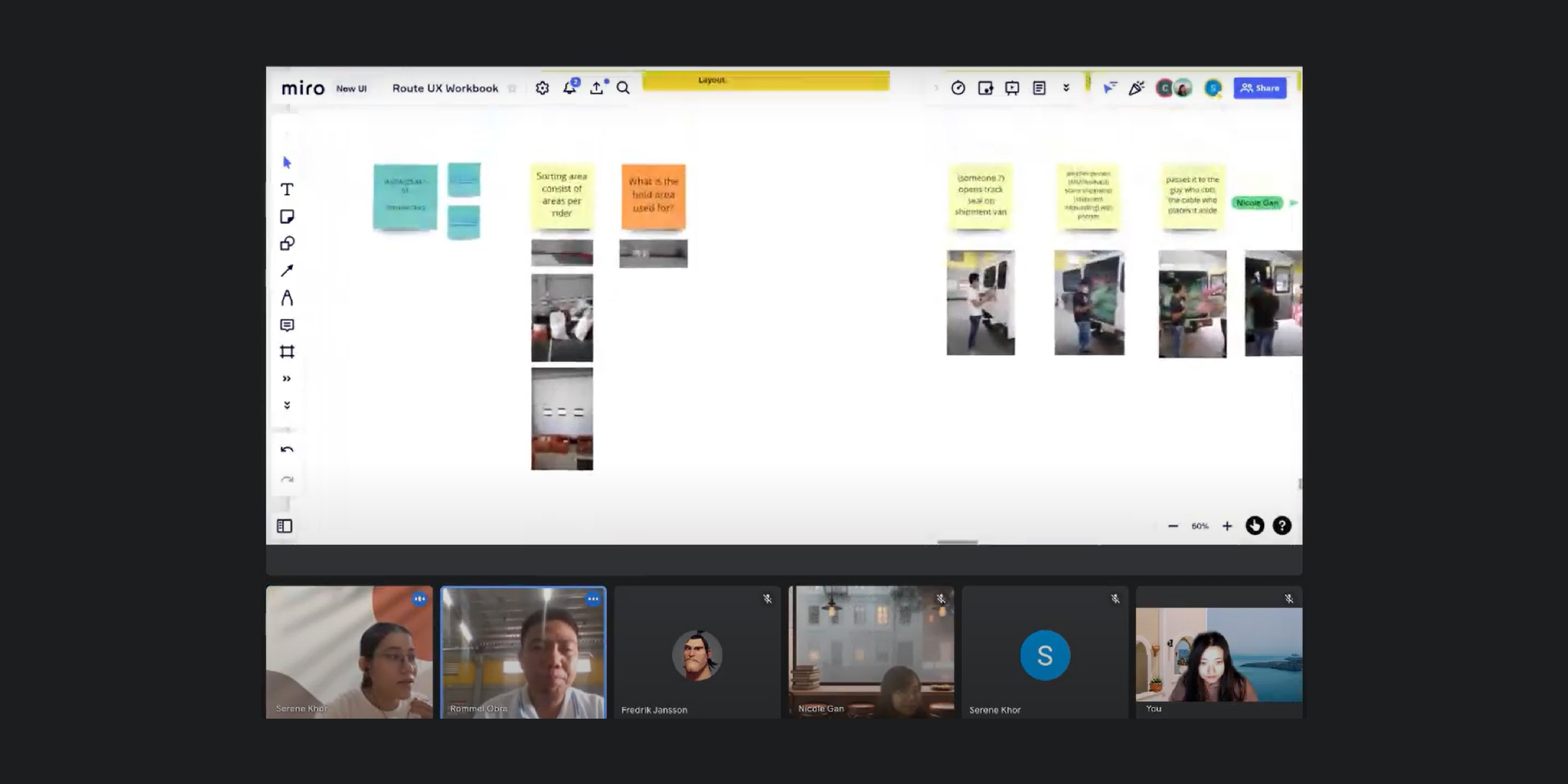
We utilised visual material to facilitate interviews with the sorting facility team.
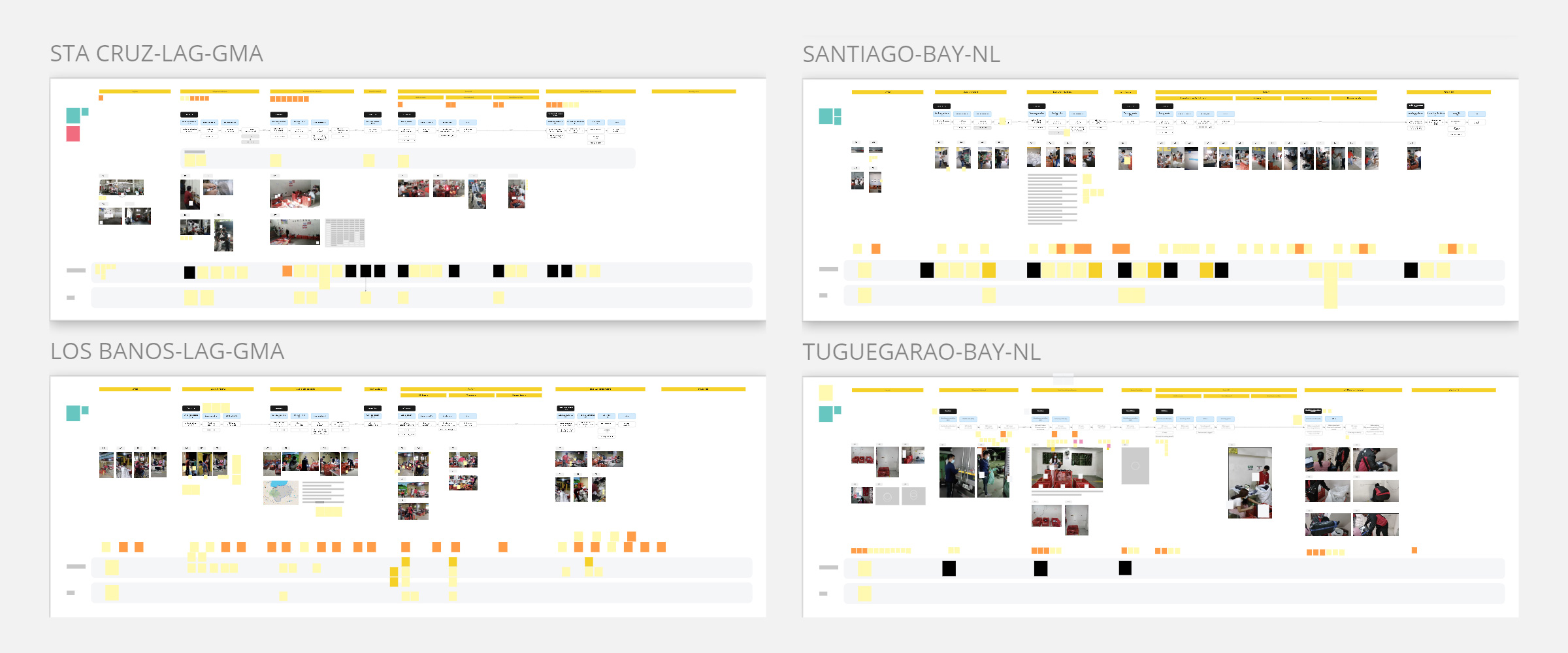
Snippets of photos and video recordings from each of the four facilities were mapped chronologically to demonstrate the sorting process.
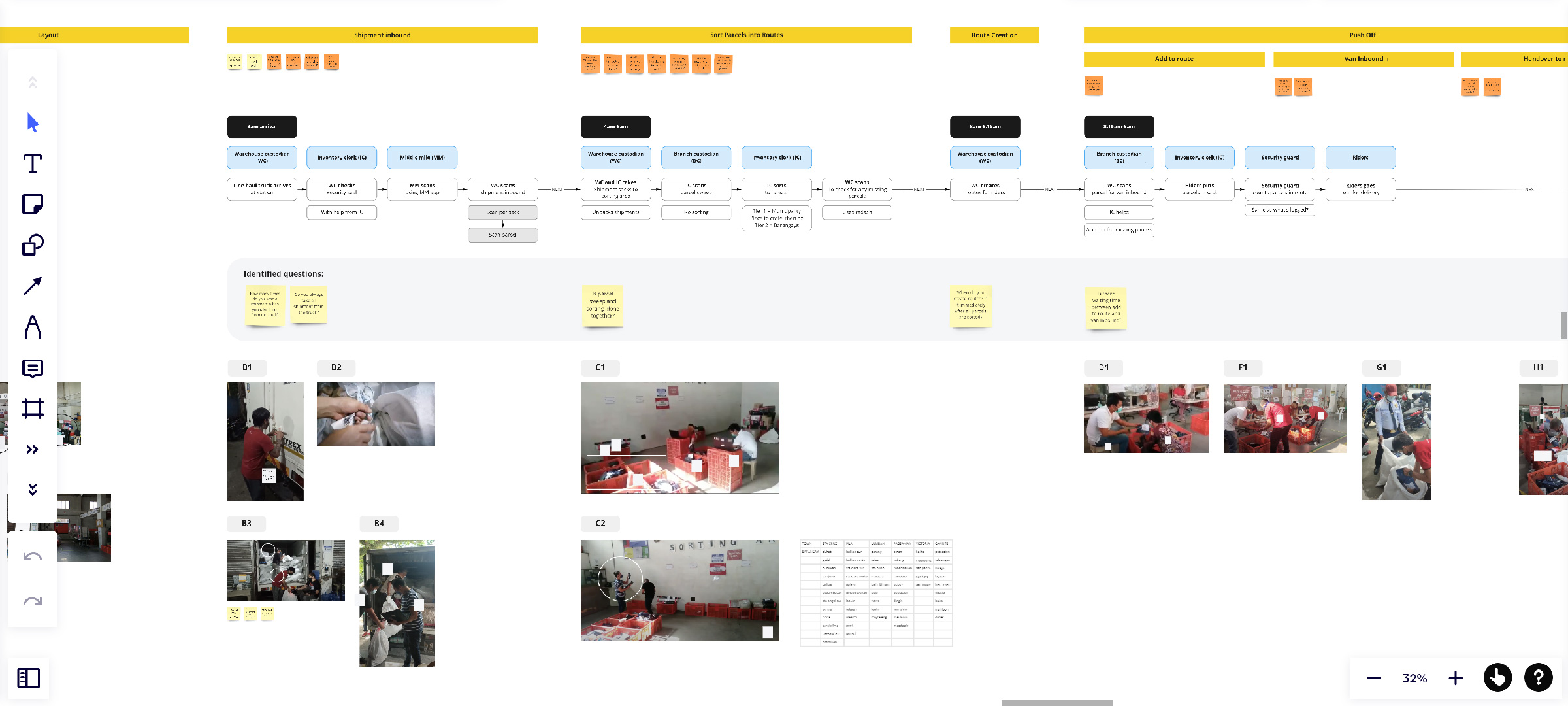
Each map consists of flows, images and questions for local teams to clarify during the interviews.
Define 

— opportunities for efficiencies

Manual parcel sorting is the most time-consuming and mentally taxing task for sorters. How might we reduce dependency on their knowledge so that they can process parcels with reduced mental effort and time?

Parcel sorting is challenging for sorters because they have to manually look for keywords in an address and use their knowledge of riders' coverage to sort the parcel.

The task requires the most time and headcount. For example, it takes about 2 to 3 hours for 3 sorters to process average parcel volumes. It accounts for up to 70% of processing time in some facilities.

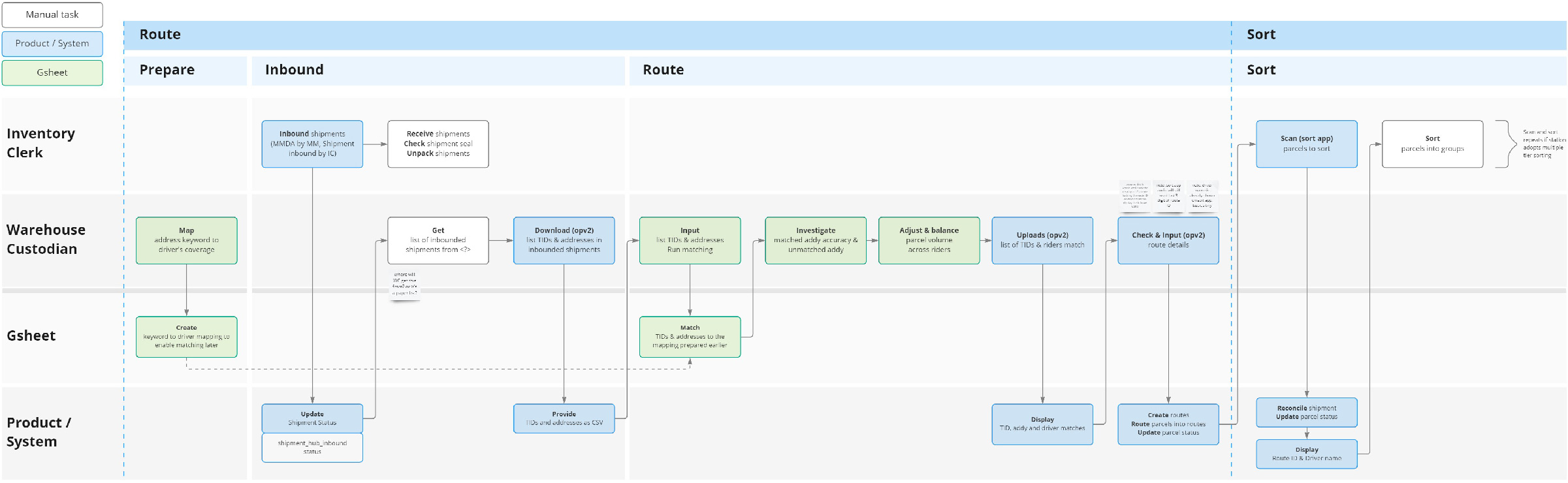
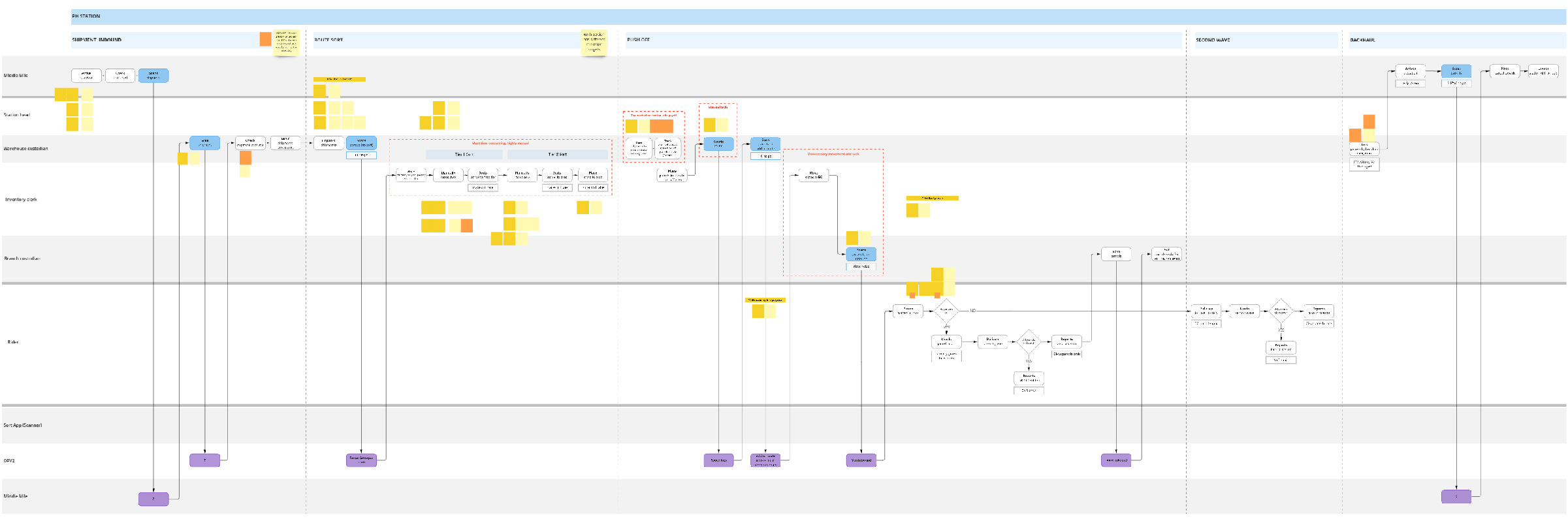
Built a service blueprint to identify the inefficiencies highlighted in the red boxes

Develop 

— a more efficient workflow

Build empathy for users with the engineers

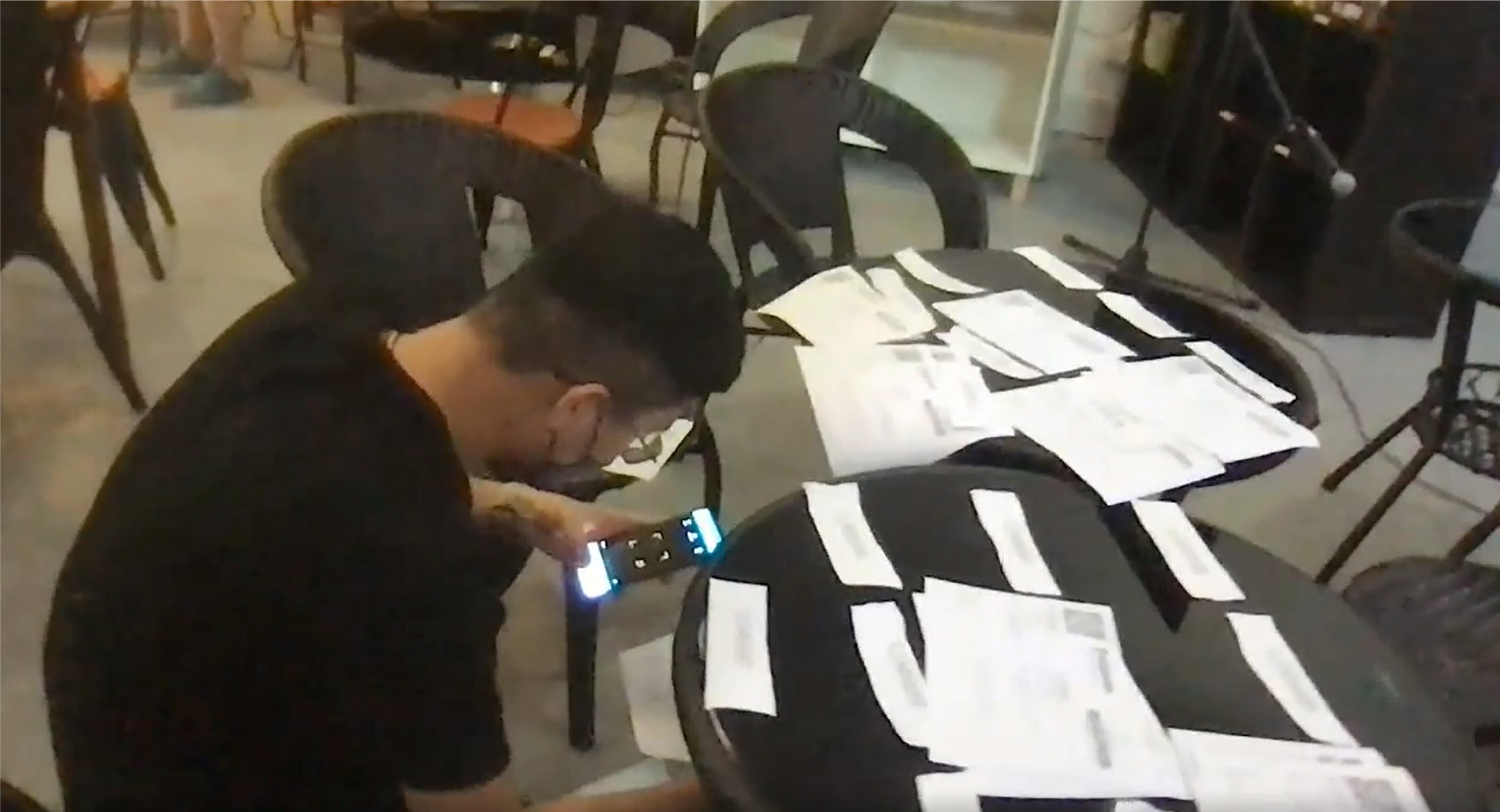
Our engineers feedbacked that they felt disconnected from the design process. To engage them and build empathy for our users, we simulated the manual sorting process for our engineers to try. The activity helped them better understand our insights and contribute confidently in the development stage. Our team could incorporate their ideas and expertise to improve the workflow for our users.

An engineer attempting to sort a stack of parcel labels into riders' routes.

Facilitating workshops for engineers to raise questions and share ideas about the sorting process.

Propose a streamlined flow

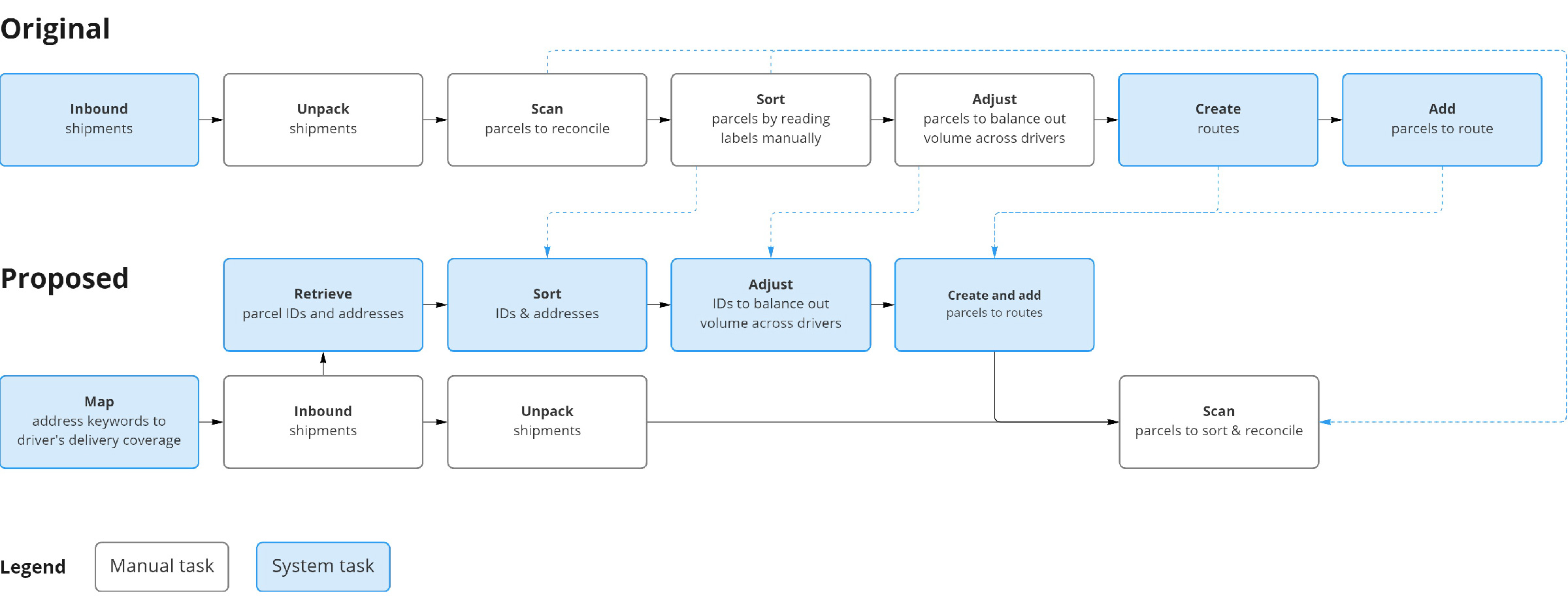
To reduce the mental effort of our sorters, our team sought to tap into their local knowledge to create a system that would emulate their approach to sorting parcels. The concept uses common address keywords to assign parcel IDs to the dedicated rider's coverage. The proposed flow also seeks to shave repetitive manual tasks in the end-to-end process.

The diagram shows the moving of manual tasks (white) in the original flow to automated tasks (blue) in the new proposed flow.

Reduce development time from 2 weeks to 2 days

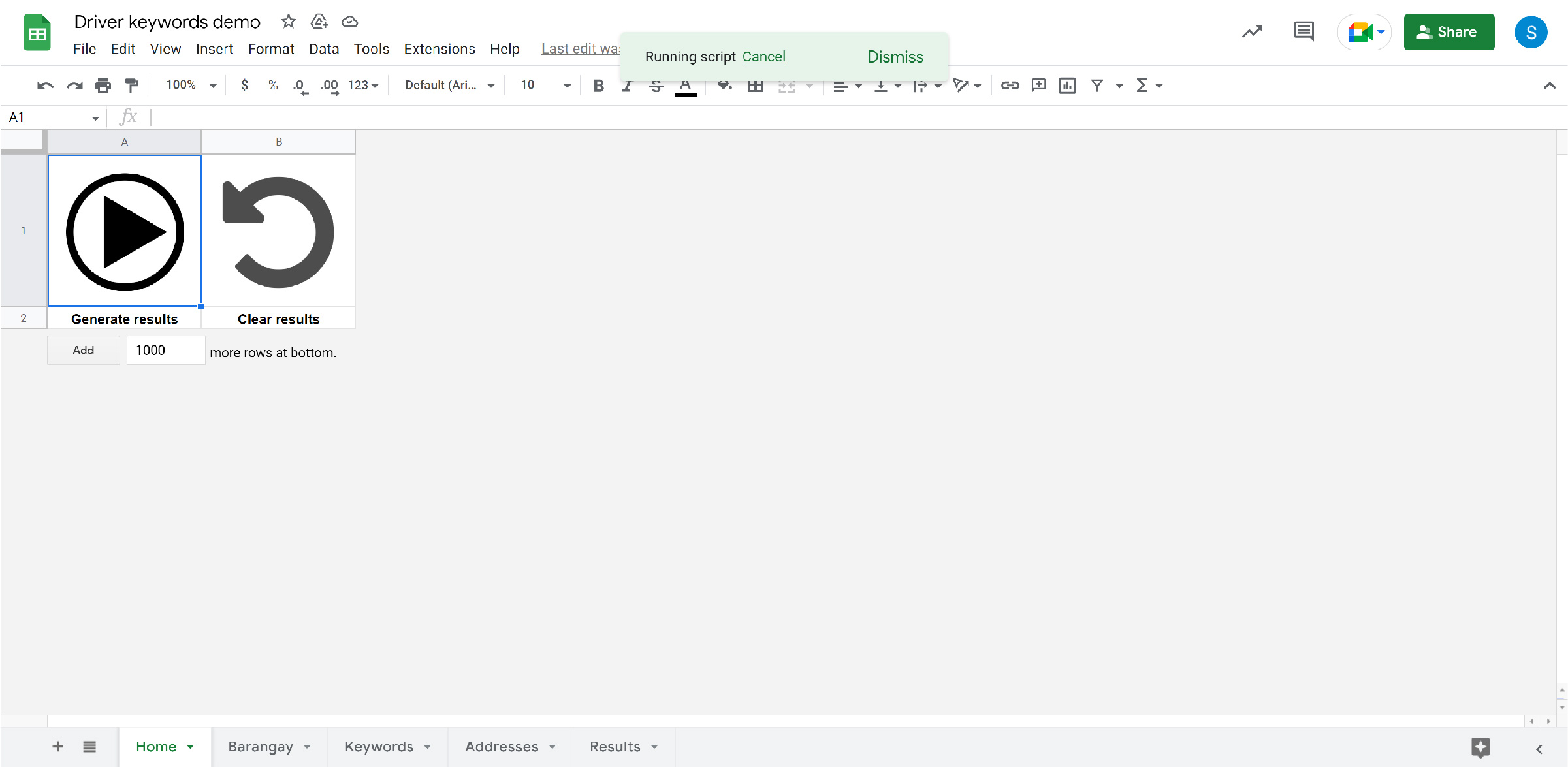
Our engineers quoted a two-weeks sprint to develop the main feature on the internal systems. Feeling unsettled, I went back to the drawing board. Shortly, I proposed to script a google sheet instead to test concept, effectively reducing the development time to 2 days. It gave engineers time to work on the remaining touchpoints required in the end-to-end flow, completing all necessary builds within one week.

Diagram of how the google sheet (green) sits in the proposed to enable testing on the ground.

A prototype was built in 2 days instead of 2 weeks.

Iterate 

— on the ground

Proof of concept in the Philippines

While our developers worked on the builds, we planned a 4-day trial with two selected facilities. The team visited the Philippines to personally introduce the new end-to-end flow to station managers and sorters. We first observed their current workflows to build the understanding to help mediate concerns and obstacles in preparation for the trial. During the trial, we observed how teams took to the new processes, took down the time required for each task, and identified bottlenecks in the new flow.

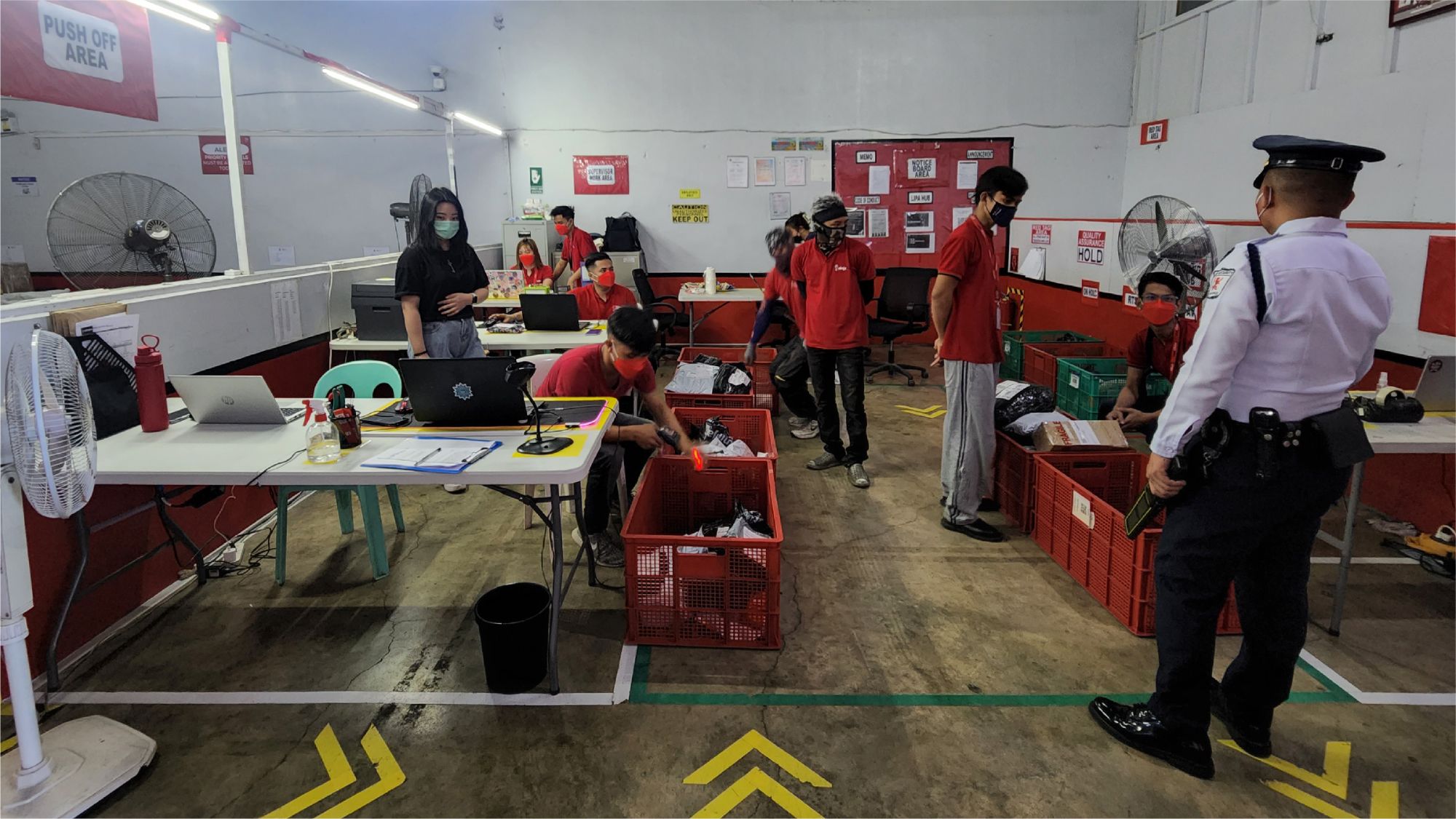
Observing the existing end-to-end process.

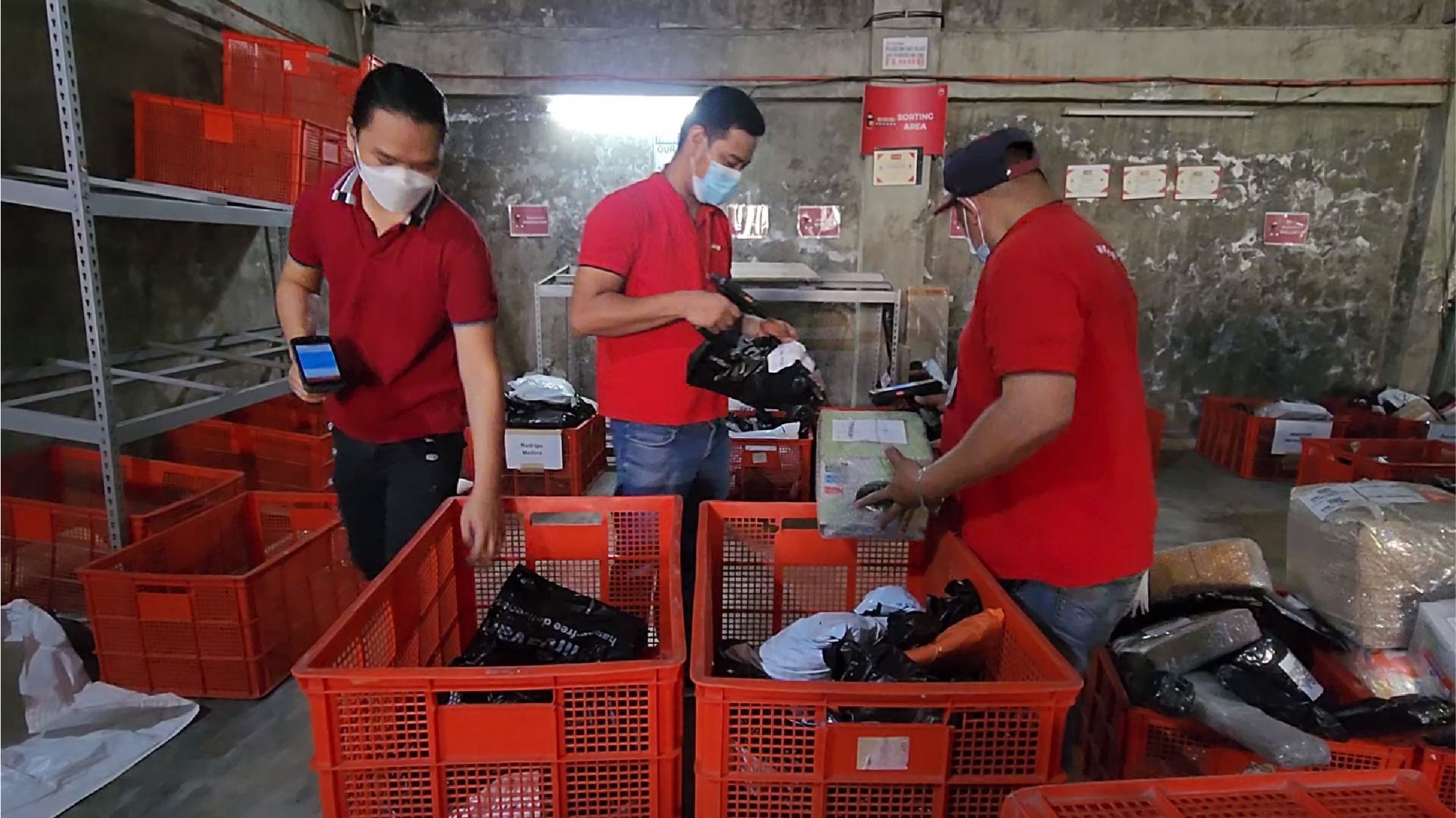
Scanning parcels to sort instead of reading addresses manually.

We achieved a 25-50% reduction in the sorting time, and will be rolling out the new process to more facilities.

The participating local teams are happy about the new process and adopted it in their daily operations. Area managers who observed the trial are excited to roll it out to their remaining facilities. Our team also convinced higher management with promising results to continue iterations on the new approach.

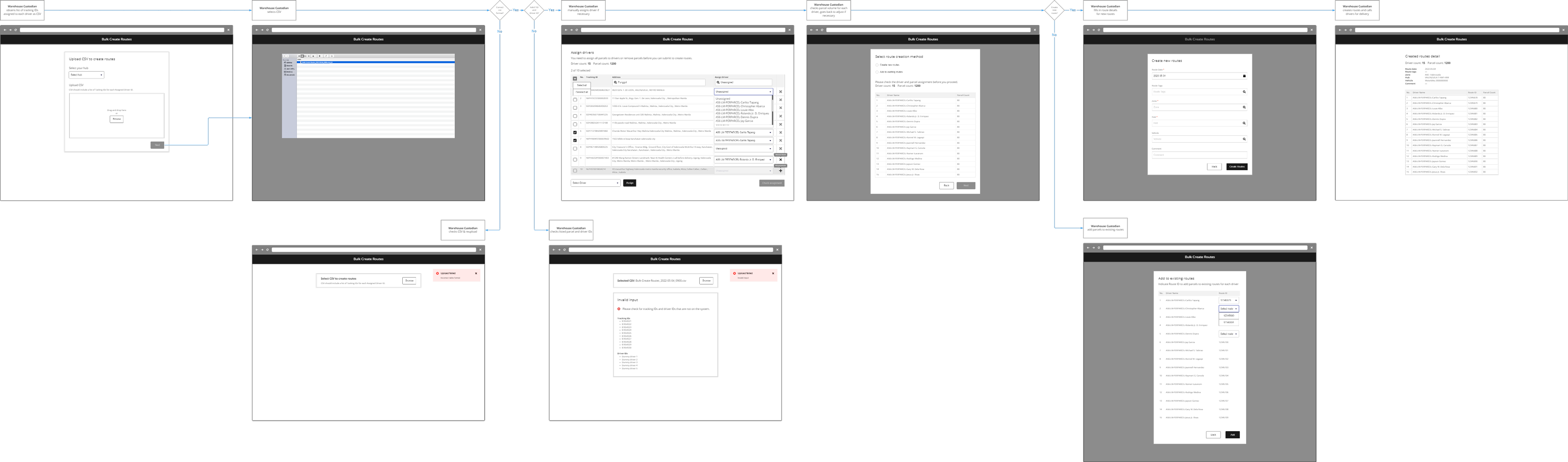
With the insights from the trial, our team is ironing out bottlenecks and prioritising necessary improvements for the rollouts. I collaborated with designers to put together prioritised flows and wireframes to fast-track the development process and will continue to iterate to deliver a seamless workflow for our users. Our team is also looking to test the flow in Indonesia, which faces similar sorting challenges as the Philippines.

Quick iterations on flows and wireframes are shared with engineers to fast-track the development process.

Learnings

Build fast to learn fast

The experience taught me how valuable it is to be agile. Running on a tight timeline, we were strategic in planning the research. We acted quickly on our insights. We reduced development time from over two weeks to just one. It helped our team avoid sunken costs that may derail our progress in delivering value to our users.

Research high and low

Conducting research with different interviewee types provided a more holistic understanding of the operations. The findings from each interview structured my approach to sizing the problem and prioritising efforts for the subsequent ones. It eventually directed me toward users who faced the most challenges on the ground.

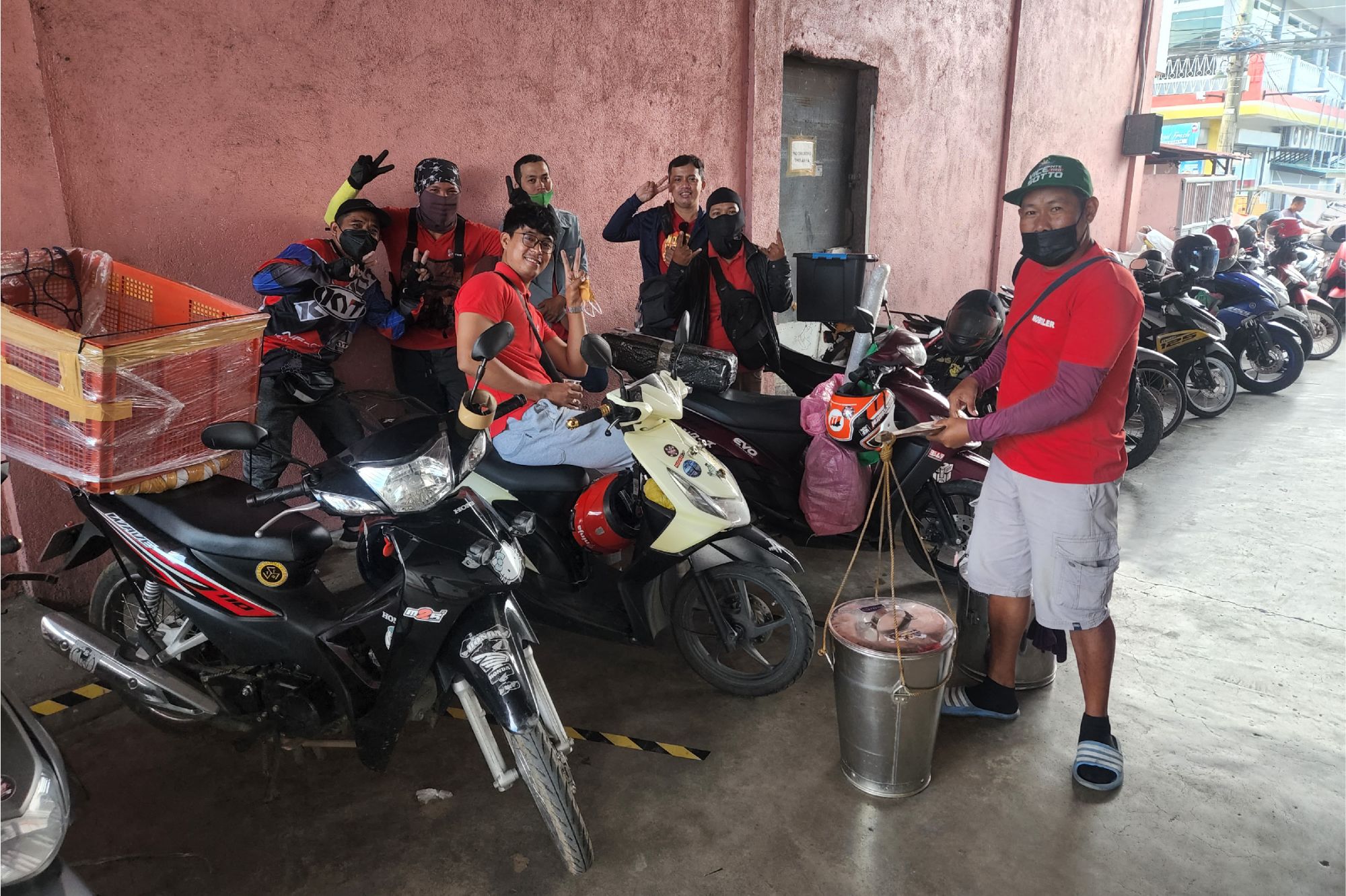
Cheerful interactions with delivery riders on the ground.